

Navigating the complexities of personal financial affairs can be challenging for clients, especially when they’re just getting started. It’s often hard to know where to begin, and there are so many factors to consider. How do they achieve their financial goals when market conditions are constantly changing?
As an Independent Financial Advisor, you are uniquely positioned to guide clients through this uncertainty. Your ability to offer unbiased, personalized advice helps them manage their money, grow their wealth, and achieve their financial goals—an approach that is increasingly sought after. One report from McKinsey & Company found the proportion of investors seeking holistic advice jumped from 29% in 2018 to 52% in 2023.
This article explores the key differences that set Independent Advisors apart, the comprehensive services you provide, and how financial planning software like Snap Projections can help you deliver more value and build stronger client relationships.
Main takeaways from this article:
- Independent Financial Advisors differ from bank or institution-affiliated Advisors by offering unbiased guidance, broad product access, transparent fees, and fiduciary-level responsibility that prioritizes client interests.
- Independence creates advantages for both clients and Advisors, with clients gaining tailored strategies, greater choice, and continuity of service, while Advisors benefit from autonomy, flexibility, and stronger long-term relationships.
- Independent Financial Advisors can take many forms—including fee-only Advisors, dual-licensed professionals, Certified Financial Planners, specialized niche Advisors, and boutique firms—giving clients options that match their financial goals and preferences.
- Their responsibilities span client relationship management, investment strategy, tax and retirement planning, risk and estate planning, and ongoing education, all designed to deliver holistic financial guidance.
- Tools like Snap Projections empower Independent Advisors to simplify data gathering, model real-time scenarios, and present clear, client-friendly visuals—enhancing trust, improving engagement, and freeing up more time for face-to-face conversations.
What is an Independent Financial Advisor?
An Independent Financial Advisor is a licensed professional who provides financial planning and investment guidance without being tied to a single bank, insurer, or financial institution. Unlike institution-based or “captive” Advisors, independent Advisors operate independently, giving them the freedom to recommend strategies and products that best serve their clients’ needs. This autonomy shapes every aspect of the client experience and creates several important distinctions:
- Unbiased advice and fiduciary responsibility: Many Independent Advisors operate under a fiduciary standard, meaning they are legally and ethically bound to act in their clients’ best interests. Without pressure to promote proprietary products, recommendations are driven solely by client goals.
- Broad product access: Unlike captive Advisors limited to their institution’s offerings, Independent Financial Advisors can source investments, insurance, and financial products from across the marketplace. This flexibility allows for more tailored and diversified solutions.
- Transparent fees: Independent Advisors often use fee-only or flat-fee structures, directly aligning their success with client outcomes. Clients understand exactly what they are paying for, which reduces conflicts of interest and builds long-term trust.
- Stronger relationships and retention: Many Independent Financial Advisors run their own practices, fostering consistency and deeper relationships over time. This continuity contrasts with larger institutions where Advisor turnover can disrupt service—an important factor, as research shows nearly one third of investors switch firms when their Advisor departs.
Why independence matters
Together, these qualities make Independent Financial Advisors uniquely positioned to deliver clarity, trust, and tailored advice. Clients benefit from solutions designed around their specific goals—not institutional priorities—while enjoying stronger alignment between fees, performance, and outcomes.
Despite the value of professional guidance, a poll by CIBC and FP Canada found that just 25% of Canadians work with a Financial Advisor, and 30% admit they have no financial plan at all. This underscores a significant opportunity for Independent Advisors to fill important planning gaps.
Equip yourself with modern Advisory tools
Refresh your Advisory approach with resources crafted for Canadian Financial Advisors.
Download the Financial Planner Toolkit for guides and checklists that elevate your client conversations.
Benefits of Independent Financial Advisors
Independence creates advantages not only for clients but also for the Advisors themselves. The model empowers both sides of the relationship:
Benefits for clients
- Unbiased guidance: Clients receive recommendations built around their goals, not institutional quotas.
- Greater choice: Access to a wide range of products and providers ensures more customized, diversified solutions.
- Transparency: Clear, client-focused fee structures make costs easy to understand and build trust.
- Continuity of service: Independent Advisors often run their own practices, meaning clients experience less disruption and more consistent relationships.
- Comprehensive support: With freedom from product restrictions, Independent Financial Advisors can integrate investments, insurance, tax strategies, and estate planning into one cohesive plan.
Benefits for Advisors
- Autonomy: Advisors control their practice direction, client focus, and service model without institutional limitations.
- Flexibility: Independence allows Advisors to adapt strategies quickly in response to market shifts or client needs.
- Stronger relationships: With the freedom to design personalized solutions, Advisors can build deeper, longer-term client trust.
- Business growth potential: By aligning their success with client outcomes, Independent Financial Advisors strengthen retention and referrals, driving sustainable growth.
Together, these benefits explain why independence is increasingly attractive—for Advisors who want greater control over their practice, and for clients who value clarity, trust, and advice designed around their financial well-being.
Types of Independent Financial Advisors
Not all Independent Financial Advisors work the same way. While they share the freedom to act without institutional ties, their focus and structure can differ depending on client needs and business models:
- Fee-only Advisors: These Advisors earn compensation solely from clients through flat fees, hourly rates, or a percentage of assets under management. Their independence from commissions reduces conflicts of interest and fosters transparency.
- Dual-licensed Advisors: Some Independent Financial Advisors hold both securities and insurance licenses, enabling them to offer investment solutions alongside insurance planning. This enables more comprehensive strategies that address both protection and growth.
- Financial Planners and CFPs: Certified Financial Planners often emphasize holistic planning, covering budgeting, retirement, tax, and estate planning. They may not manage investments directly, but provide in-depth strategy and oversight.
- Specialized Independent Advisors: Many Independent Financial Advisors focus on specific groups such as business owners, retirees, or professionals in certain industries. This specialization helps them deliver highly tailored guidance based on unique challenges.
- Boutique or multi-Advisor firms: Some Independent Financial Advisors operate independently within small firms or partnerships, combining personalized service with shared expertise and resources.
This variety means clients can find an Independent Advisor who matches both their financial situation and their preferred approach to planning.
Roles and tasks of an Independent Financial Advisor
Independent Financial Advisors wear many hats, serving as trusted partners across all aspects of their clients’ financial lives. Their responsibilities span several key areas, each requiring specialized knowledge and ongoing attention.
Client relationship & comprehensive planning
Advisors begin by building strong client relationships grounded in trust, discovery, and transparency. This means:
- Conducting a needs assessment: They review income, assets, debts, family obligations, and long-term aspirations to understand the client’s full financial picture.
- Reviewing core documents: They examine tax returns, pension statements, insurance policies, and investment accounts to ensure all factors are considered.
- Setting SMART goals: They help clients define goals such as saving for a down payment in five years, fully funding RESPs, or retiring at a chosen age.
Advisors revisit these goals regularly, adjusting for life changes like marriage, career shifts, or inheritances. Consistent communication—quarterly check-ins, annual reviews, or digital updates—keeps clients engaged and confident in the plan.
Investment & wealth strategy
Independent Advisors can build customized portfolios free from institutional product lists. Their services may include:
- Portfolio construction: They design portfolios that balance equities, fixed income, alternatives, and cash to match client objectives.
- Diversification: They spread investments across sectors, geographies, and account types (RRSP, TFSA, non-registered) to manage risk.
- Ongoing monitoring: They track portfolio performance and make adjustments when market conditions or client needs change.
- Rebalancing: They ensure portfolios remain aligned with the client’s risk tolerance and long-term goals.
Independence also allows Advisors to adapt quickly, whether that means incorporating responsible investing preferences, adjusting for tax efficiency across multiple accounts, or aligning portfolios with specific life milestones such as funding education or preparing for retirement.
Tax & retirement optimization
Tax planning and retirement income strategies are central to long-term success. Advisors help by:
- Maximizing contributions: They guide clients to use RRSPs for tax deferral and TFSAs for tax-free growth.
- Optimizing government benefits: They create CPP and OAS claiming strategies that minimize clawbacks and maximize retirement income.
- Structuring withdrawals: They coordinate withdrawals from RRSPs, RRIFs, and non-registered accounts in a tax-efficient order.
- Identifying planning opportunities: They highlight strategies such as charitable giving or income splitting to reduce overall tax liabilities.
With inflation and longevity risks top of mind, Advisors can use projections to show how different drawdown sequences impact long-term sustainability.
Risk management and estate planning
Independent Advisors help protect client wealth while ensuring smooth transfer to beneficiaries. This involves:
- Recommending insurance coverage: They evaluate needs for life, disability, and critical illness insurance to safeguard clients and their families.
- Coordinating the review of documents: They work with clients and their lawyers or other professionals to ensure wills, trusts, and beneficiary designations are regularly reviewed.
- Supporting legacy planning: They help design charitable giving, family wealth transfers, or education funding strategies for future generations.
Clear estate documentation benefits all clients, not just high-net-worth households, by minimizing stress and ensuring wishes are carried out effectively.
Ongoing education and advocacy
Independent Advisors also act as educators and advocates. They can:
- Translate complex concepts: They simplify financial strategies into plain, accessible language for clients.
- Provide context: They explain market movements and help clients stay focused during volatility.
- Share updates: They proactively communicate regulatory or tax changes that may impact financial plans.
- Advocate for client interests: They represent and defend client needs when working with institutions or service providers.
By positioning themselves as long-term partners, Independent Advisors can reinforce trust and strengthen retention across generations. With Snap Projections, Advisors can back this trust with transparent, client-friendly visuals and real-time scenario planning that make complex strategies easy to understand.
Transform planning with dynamic scenario modelling
See how Snap Projections enables real-time “what-if” scenarios to elevate client trust and decision-making.
Explore how our platform supports the independent Advisory approach.
How Snap Projections empowers Independent Financial Advisors
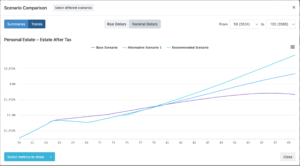
Snap Projections streamlines financial planning and strengthens the Advisor-client relationship. By simplifying data entry, automating calculations, and providing interactive visuals it helps Advisors work more efficiently while spending more time with clients.
- Simplify financial assessments: Input client details such as income, expenses, assets, and liabilities to instantly generate retirement projections, tax analyses, and cash flow summaries.
- Model scenarios in real time: Explore “what-if” outcomes by adjusting variables like inflation, returns, or spending, helping clients see the long-term impact of their decisions.
- Enhance client engagement: Automation reduces time spent on spreadsheets so Advisors can focus on face-to-face conversations. Interactive reports and visuals make complex strategies clear and build client trust.
- Save time with automation: The platform handles comparisons, calculations, and reporting, freeing Advisors to prioritize client meetings and strategic planning.
- Stress-test plans for resilience: Simulate market downturns, inflation surges, or longevity risks to identify vulnerabilities and develop strategies that protect long-term goals.
Enhance efficiency with Snap Projections
Between juggling client needs, managing complex financial plans, and staying ahead of market trends, maximizing efficiency is crucial as an Independent Financial Advisor.
With powerful, all-in-one financial planning software like Snap Projections at your disposal, you can streamline your financial planning process and focus on what matters most: building strong client relationships and delivering exceptional service.
Are you ready to experience the Snap Projections difference?
Financial Advisors can start a 14-day trial today to see how our software can revolutionize your workflow and empower you to deliver exceptional client service.
FAQs about Independent Financial Advisors
How can Independent Financial Advisors differentiate themselves from bank-affiliated Advisors?
Independent Financial Advisors can stand out by emphasizing unbiased advice, broad market access, and a fiduciary duty to act in the client’s best interest. Unlike bank Advisors limited to proprietary products, Independent Financial Advisors can tailor solutions across the market, building trust and demonstrating value through transparency, personalization, and long-term relationships.
What compliance and regulatory requirements should Independent Financial Advisors be most mindful of?
Independent Financial Advisors must adhere to provincial and federal securities regulations, maintain proper licensing, and follow Know Your Client (KYC) and suitability requirements. They should also prioritize documentation, disclosure, and ongoing compliance training to meet fiduciary standards and protect both clients and their practice.
Which fee structures work best for different client segments?
Fee structures should align with client needs. High-net-worth clients often prefer asset-based fees (AUM), while younger or cost-conscious clients may benefit from flat fees or hourly rates. Transparency is critical—clearly explaining costs builds trust and helps clients choose the model that best fits their financial situation and planning goals.