

Financial Advisors regularly create financial plans to help clients achieve their goals. To do this effectively, they need to invest time and effort to understand each client’s unique financial situation, including their objectives, risk tolerance, and capacity.
Once an Advisor has this information, they can develop a tailored financial plan that provides a clear path forward.
Accurate cash flow forecasts provide a powerful framework for Advisors to visualize potential outcomes and develop proactive financial plans. By understanding the client’s financial situation, Advisors can help clients tackle the complexities of modern finance and achieve their financial goals.
This blog post discusses the importance of projected cash flow in financial planning and the value of using a structured cash flow projection template.
Main takeaways from this article:
- Cash flow projection templates help Advisors take financial data and turn it into a tangible action plan that clients can genuinely understand and implement
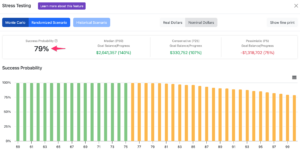
- Scenario planning and stress testing add depth to financial forecasts, enabling Advisors to model the impact of life events, market shifts, or client decisions in real time
- Excel templates offer flexibility but come with limitations, including manual effort, potential for errors, and a lack of visual presentation tools
- Using structured templates supports personalized planning, clearer communication, and ongoing plan updates, all of which contribute to stronger, trust-based client relationships
- Professional software like Snap Projections streamlines cash flow planning with built-in accuracy, real-time interactivity, and client-ready visuals tailored to Canadian Advisors
What is a cash flow projection template?
A cash flow projection template is a structured framework that outlines the key components of a cash flow projection. It includes sections for income sources, expenses, and net cash flow, allowing for systematic data entry and analysis.
For Canadian Financial Advisors, a well-designed cash forecast template may serve as the foundation for creating accurate financial plans. It can help you visualize your clients’ financial futures and identify potential shortfalls or surpluses before they occur.
Key elements of a cash flow projection template
A comprehensive cash flow projection template should include the following key elements:
- Income sources: This section should encompass all sources of income, including employment income, investment income (RRSP/RRIF/TFSA/LIRA withdrawals, dividends, interest, capital gains), rental income, pension income (DBPP/DCPP), and government benefits (CPP/QPP, GIS, OAS).
- Expenses: This section should include all types of expenses, such as housing costs (mortgage payments, rent, property taxes), utilities, transportation, food, healthcare, education, entertainment, and discretionary spending.
- Net cash flow: This represents the difference between total cash inflows and total cash outflows. A positive net cash flow indicates a surplus, while a negative net cash flow indicates a deficit.
- Forecasted period: This specifies the timeframe for which the cash flow projection is being made, which could range anywhere from a few months and years to several decades.
Example: A simple monthly cash flow projection template
Here’s a basic example of how a cash flow projection template might look in practice. This simple version tracks monthly income, expenses, and net cash flow, and can be expanded or customized based on client needs.
| Month | Income (Employment) | Income (Investments) | Total Income | Housing & Utilities | Food & Living | Other Expenses | Total Expenses | Net Cash Flow |
|---|---|---|---|---|---|---|---|---|
| January | $5,000 | $500 | $5,500 | $1,800 | $800 | $700 | $3,300 | $2,200 |
| February | $5,000 | $500 | $5,500 | $1,800 | $800 | $700 | $3,300 | $2,200 |
| March | $5,000 | $500 | $5,500 | $1,800 | $800 | $700 | $3,300 | $2,200 |
This example is simplified to illustrate the structure. Advisors can expand it to include more income sources, detailed expense categories, or longer projection periods.
Take your planning process further
Ready to build clearer, client-focused plans? Download the Financial Planner Toolkit for templates, checklists, and planning resources built for Canadian Advisors.
What are the benefits of using cash flow templates?
Using structured, data-driven cash flow forecasts doesn’t just improve accuracy—it strengthens decision-making. In fact, 82% of small businesses fail due to cash flow problems, underscoring how critical it is to anticipate shortfalls before they happen. Cash flow projection templates can help Advisors and their clients combat this risk by providing a clear, organized framework to spot potential gaps and adjust strategies in advance.
Let’s explore the potential benefits of using cash flow templates for both Financial Advisors and their clients in the table below.
| For Clients | For Financial Advisors |
|---|---|
| Greater financial awareness – Clarifies income, expenses, and net cash flow. | Increased efficiency – Automates calculations and reduces manual data entry. |
| Better decision-making – Helps visualize outcomes and compare options. | Improved engagement – Encourages collaborative planning and deeper client conversations. |
| Reduced stress – Identifies risks early and supports confident planning. | Enhanced accuracy – Minimizes manual errors, ensuring more reliable projections. |
| Stronger goal setting – Ties financial actions directly to achievable goals. | Professional presentation – Demonstrates expertise and reinforces credibility. |
| Improved communication – Supports open dialogue and ongoing Advisor relationships. | Business development – Showcases planning capabilities to attract and retain clients. |
| Transparent planning – Provides clients with a clear explanation of how recommendations are made, increasing trust and confidence in the plan. | Regulatory confidence – Maintains a clear audit trail and documents key assumptions to support compliance and demonstrate professional diligence. |
Types of cash flow projection templates for Financial Advisors
Financial Advisors may use different types of cash flow projection templates depending on the planning context, client profile, and their unique goals. Understanding these formats can help you select the right approach for each client engagement.
1. Time-based projection templates
- 12-month projections: Best for short-term planning, budgeting, or annual financial reviews.
- 36-month projections: Useful for medium-term goals like education savings or major purchases.
- Lifetime projections: Ideal for retirement and estate planning, showing income, expenses, and asset drawdowns over several decades.
2. Scenario-based and stress-testing templates
These templates allow Advisors to model the impact of changes in inflation, market returns, or unexpected life events. Scenarios can include job loss, early retirement, or medical expenses, helping clients understand risk and plan accordingly.
3. Client-specific templates
Cash flow templates may be tailored for:
- High-net-worth individuals with complex portfolios
- Retirees drawing income from multiple sources
- Business owners with variable income
- Blended families with shared and individual financial goals
Flexible tools like Snap Projections allow Advisors to adapt templates to reflect each client’s needs and evolving circumstances.
How to create cash flow projection templates
Once you’ve identified the type of template needed, the next step is choosing the tool you’ll use to build it. Advisors typically rely on either spreadsheet software or professional financial planning platforms.
Excel-based templates
Excel remains popular due to its accessibility and flexibility. A typical Excel cash flow projection includes:
- Monthly columns to track inflows and outflows
- Income categories like employment, government benefits (CPP/OAS), and investments
- Expense rows for fixed, variable, and discretionary costs
- Built-in formulas to calculate net cash flow and cumulative balances
While customizable, Excel templates are time-consuming to build and maintain. Manual inputs also increase the risk of error and may limit client engagement due to a lack of visuals.
Professional financial planning software
Platforms like Snap Projections are designed to streamline cash flow planning. Key features include:
- Dynamic projections that update in real time as assumptions are changed
- Scenario comparison tools to evaluate multiple strategies at once
- Canadian-specific functionality for TFSAs, RRSPs, CPP, OAS, and tax optimization
- Client-ready reports with clear visuals and one-page summaries
Using professional software can help improve accuracy, save time, and improve the planning experience—both for Advisors and their clients. To ensure consistency and compliance, many Advisors follow standard industry benchmarks.
For example, Snap Projections has integrated FP Canada’s 2025 guideline assumptions, including 2.1% inflation and 6.6% equity returns. Using these standardized inputs can help ensure projections are both credible and comparable.
Looking for better planning software?
Snap Projections was built for Canadian Financial Advisors—offering dynamic cash flow modelling, tax-aware planning, and client-ready visuals.
Using an Excel cash flow template vs. financial planning software
Many Advisors start with spreadsheet programs like Excel or Google Sheets for cash flow projections. While accessible, they come with significant drawbacks compared to dedicated software.
| Excel Templates | Financial Planning Software (e.g., Snap Projections) |
|---|---|
| Time-consuming – Requires manual input, formula building, and customization for each client plan. | Efficient and automated – Handles complex calculations quickly, saving time on plan creation and updates. |
| Error-prone – Manual formulas increase the risk of mistakes that may affect accuracy and compliance. | Accurate and transparent – Provides reliable, auditable projections you can explain confidently to clients. |
| Lacks professionalism – Spreadsheets can be difficult for clients to follow and don’t offer polished outputs. | Client-friendly presentation – Generates clear visuals, summaries, and reports that improve client understanding. |
| Limited functionality – Difficult to manage scenario comparisons, stress testing, or integrate Canadian tax rules. | Advanced planning tools – Supports multi-scenario modelling, stress testing, and compliance with Canadian tax and benefit structures. |
What are the steps to utilize a cash flow projection template?
To use a cash flow projection template effectively, follow the steps below. These steps will ensure that your projections are transparent and insightful.
Data gathering and initial setup
1. Gather financial data
To ensure your projections are as accurate as possible, the first step is to gather and organize all relevant financial information from your client. A complete data set is helpful and includes the following:
- Income statements that detail employment income, investment income, and expected government benefits
- Expenses such as housing, utilities, transportation, food, healthcare, education, entertainment, debt repayment, and savings
- Tax returns and investment details
- Current asset and liability balances
2. Input data into the template
Once all the information is collected, the financial data is entered into the designated sections of the chosen cash flow projection template. Accurate and timely data entry helps to increase the reliability of the subsequent analysis.
3. Adapt the template for client-specific goals
The template should be customized to align with each client’s unique financial objectives. This may involve adjusting assumptions about future income growth, incorporating specific retirement goals, or factoring in planned life events such as education expenses or the purchase of a new home.
Analysis and calculations
4. Calculate net cash flow
The template should automatically calculate the net cash flow by subtracting total expenses from total income. This calculation provides a clear picture of the client’s current financial health, indicating whether they are generating a surplus or experiencing a deficit.
5. Incorporate forecasting elements
This involves projecting future income and expenses based on various assumptions and market trends. It may involve considering factors such as inflation, interest rate changes, and potential investment returns.
6. Review and analyze the results
The generated projections must be carefully reviewed and analyzed to identify potential risks and opportunities.
Be sure to examine key metrics such as net worth, savings rate, and debt-to-income ratio to assess the client’s overall financial well-being.
This information should be used to create a comprehensive financial plan that outlines the steps the client needs to take to achieve their financial goals.
Scenario planning and client presentation
7. Adjust for scenarios
To provide a comprehensive understanding of potential outcomes, Advisors can utilize the template to model various scenarios, like unexpected medical expenses, job loss, or market downturns. This allows clients to understand the potential impact of different events on their financial situation and develop appropriate contingency plans.
See Snap Projections in action
Book a personalized demo to explore how Snap helps Advisors create accurate, professional cash flow plans, without the spreadsheet hassle.
8. Present insights to clients
The findings from the cash flow projection analysis should be presented to the client clearly and concisely. The analysis should be tailored to the client’s financial situation and presented in an easy-to-understand format.
Consider using visual aids, such as charts, graphs, and other illustrations, which can help the client understand the key findings and implications of their current financial situation. The presentation should also include recommendations for managing cash flow and achieving financial goals.
9. Regularly update the template
The cash flow projection template should be regularly updated to reflect changes in the client’s financial circumstances, such as changes in income, expenses, or investment portfolio. This ongoing review and adjustment ensure that the financial plan remains relevant and effective over time.
Transform your cash flow planning with Snap Projections
Snap Projections empowers Financial Advisors with a powerful suite of features that streamline the financial planning process and increase client engagement.
Choosing the right tools for cash flow planning can significantly impact how Advisors support their clients. While spreadsheets offer flexibility, they often lack the accuracy, efficiency, and clarity needed for professional planning, especially as client needs become more complex.
Snap Projections gives Financial Advisors a distinct advantage. With interactive projections, scenario comparisons, and one-page summaries, you can clearly show clients how different decisions affect their financial future. Built for the Canadian market, Snap simplifies everything from registered account planning to stress testing.
If you want to streamline your workflow, strengthen client conversations, and deliver plans with confidence, Snap Projections is a must-have. Start your 14-day Free Trial today.
FAQs
Is there a cash flow template in Excel?
Yes, cash flow templates are available in Excel. These templates provide a basic framework for tracking income, expenses, and net cash flow.
However, they have significant limitations in functionality, customization, and the ability to incorporate complex scenarios. They are also time-consuming to create and use, and verifying the calculations can be difficult for Advisors.
How do you create a cash flow projection?
Start by listing expected income and expenses over a set time frame (monthly or annual). Include employment income, government benefits, debt payments, and savings. Subtract expenses from income to calculate net cash flow. Review the results to spot surpluses or shortfalls and adjust accordingly. Tools like Snap Projections simplify this process by allowing real-time updates and personalized, client-specific planning.
How often should a cash flow projection be updated?
Cash flow projections should be reviewed and updated regularly to reflect changes in income, expenses, investments, or market conditions. For some clients, annual updates are the minimum, but Advisors often review projections quarterly, or even in real time with planning software like Snap Projections, to keep recommendations aligned with evolving financial goals.
What makes Snap Projections different from basic cash flow templates?
While Excel templates provide static views of income and expenses, Snap Projections offers dynamic, interactive cash flow modelling tailored for Canadian Advisors. It includes tax-aware projections, registered account planning (RRSP, TFSA, CPP, OAS), scenario analysis, and client-ready reports. This helps Advisors save time, reduce errors, and deliver more engaging planning experiences.